
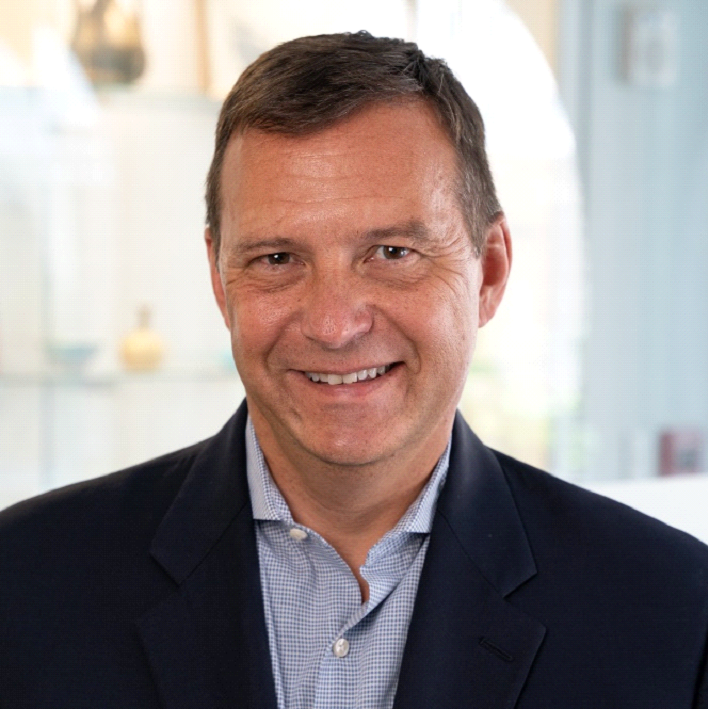
Brian Katulis
Brian Katulis is a foreign policy strategist, consultant, and senior fellow for US foreign policy at the Middle East Institute. He draws on decades of experience living and working in the Middle East, where he has forged relationships of trust and confidence across the region with top leaders in government, the private sector, media, national security, and thought leaders from a wide variety of international organizations.
Brian convenes and frequently participates in high-level briefings where he advises on the general strategy and trends of the region, bringing together leaders in the non-profit and for-profit world, government, military, and private sectors. He hosts the MEI podcast series Taking the Edge Off the Middle East and authors the column “Making Sense: A Regular Take on US Foreign Policy.” Brian frequently leads trips to countries across the region such as Bahrain, Egypt, Israel, Oman, Qatar, Saudi Arabia, and the United Arab Emirates.
Brian was previously a senior fellow on the national security team at the Center for American Progress, where he wrote time-sensitive and confidential reports for high-level policymakers and briefed top officials at the White House, State Department, and US intelligence agencies. He also testified before key Congressional committees based on his expertise on policy analysis.
Brian served on the Policy Planning Staff at the US Department of State and the National Security Council in the Near East and South Asian Affairs directorate in the second administration of President Bill Clinton. His experience also includes service in the Department of Defense at the Naval Sea Logistics Center, and the policy office of former Pennsylvania Governor Robert Casey. In 2013, United Nations Secretary-General Ban Ki-Moon appointed Brian a member of the UN Panel of Experts on Libya, where he analyzed Libya policy.
As a national security expert and geopolitical analyst, Brian is frequently quoted in leading news publications and media outlets including The Wall Street Journal, The Financial Times, The New York Times, The Washington Post, National Public Radio, and PBS Newshour. He has developed a reputation for building bridges and coalitions across partisan and ideological lines in several projects and books aimed at strengthening America’s position in the world at a time of geopolitical change. He speaks regularly at leading international conferences, and he has been named one of Washington DC’s Most Influential People by the Washingtonian magazine. He is the co-author with Nancy Soderberg of The Prosperity Agenda, a 2008 book about using America’s economic advantages to positively shape global dynamics.
In addition to his public policy leadership, Brian has years of experience working in the private sector. From 2009 to 2025, he was a senior advisor to the Middle East and North Africa practice at the Albright Stonebridge Group, where he briefed and advised corporate leaders on geopolitical strategic dynamics related to the broader Middle East. In that role and now at North Star Global Strategies, he has provided regular briefings on economic, political, and regulatory climates to facilitate successful business transactions and joint ventures, risk management strategies, and commercial dispute resolution. From 2000 to 2003, Brian was a senior associate at Greenberg Quinlan Rosner Research, where he worked on teams providing strategic advice to private corporations including former BP Chief Executive Officer John Browne, candidates for public office, and national political leaders in North and South America, Europe, and the Middle East, including British Prime Minister Tony Blair and Israeli Prime Minister Ehud Barak.
Brian began his career living and working in Egypt, Israel, the West Bank and Gaza Strip in the 1990s with the National Democratic Institute for International Affairs. He received his MPA from Princeton’s School of Public and International Affairs and he graduated summa cum laude with a BA in history from Villanova University. He was a Fulbright Scholar in Amman, Jordan from 1994-1995, where he conducted a research project on the peace process between Israel and Jordan.